

Short interview with our artist in residence E.M. Parry.
Q1: What influences your work?
A1: Queer history – I think about my work as a kind of conversation with the past, a way of trying to make sense of the world now, and as it might be, through investigating where we’ve come from, and how we got here.
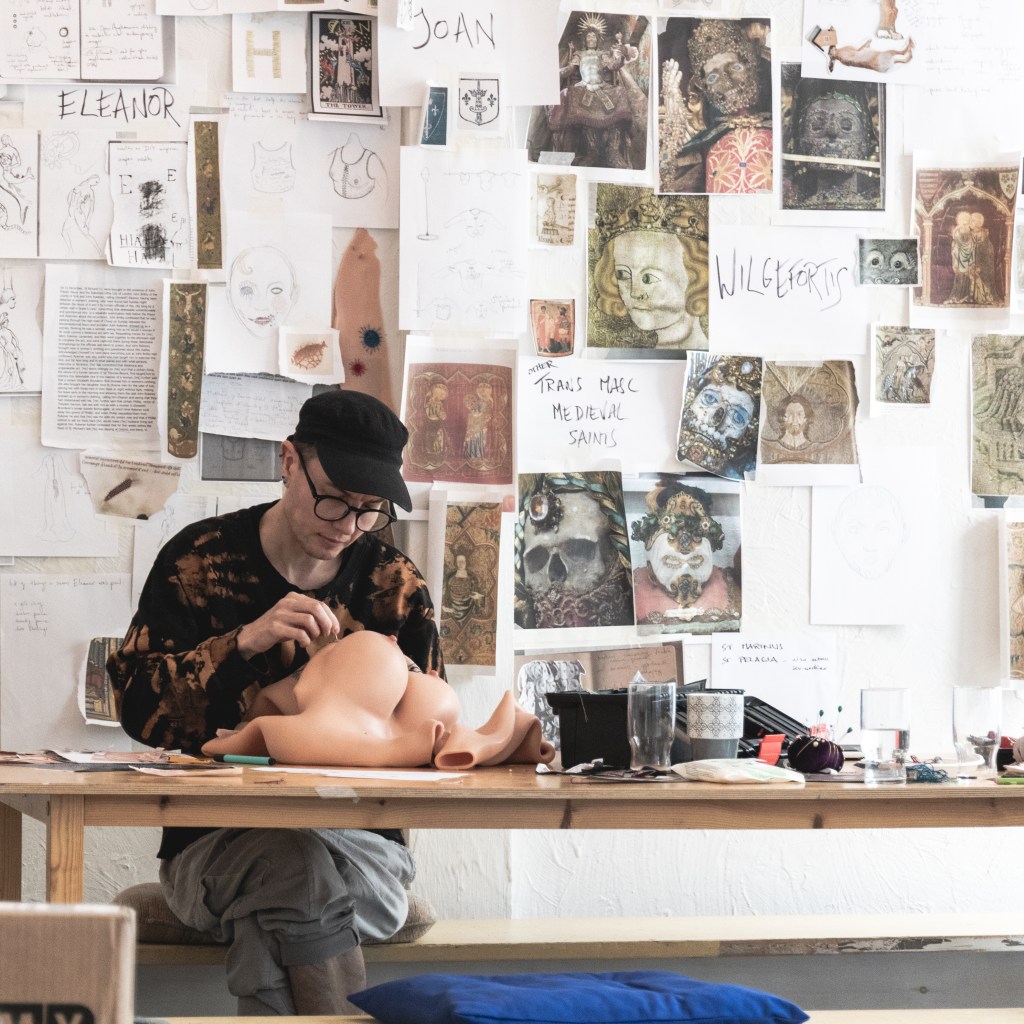
Q2: Have you noticed something new in your practice during your residency at Platform?
A2: Coming from a theatre-making background, I’ve always worked to tight timelines and deadlines; and my own work tends to be done in quite snatched bursts, juggled around other commitments. And in London, physical space tends to be very limited too. Having the luxury of both time and space in abundance during my stay here has felt very different – I notice my body is more relaxed, my thinking feels different, ideas can percolate and develop, there’s time for experimentation and mistakes, and swimming around in research just seeing what bubbles up.
Q3: Have you learned something new during your residency?
A3: I’ve learned a lot about Joan of Arc! And many more obscure gender-queering medieval saints.
Q4: What questions or themes are you currently working with?
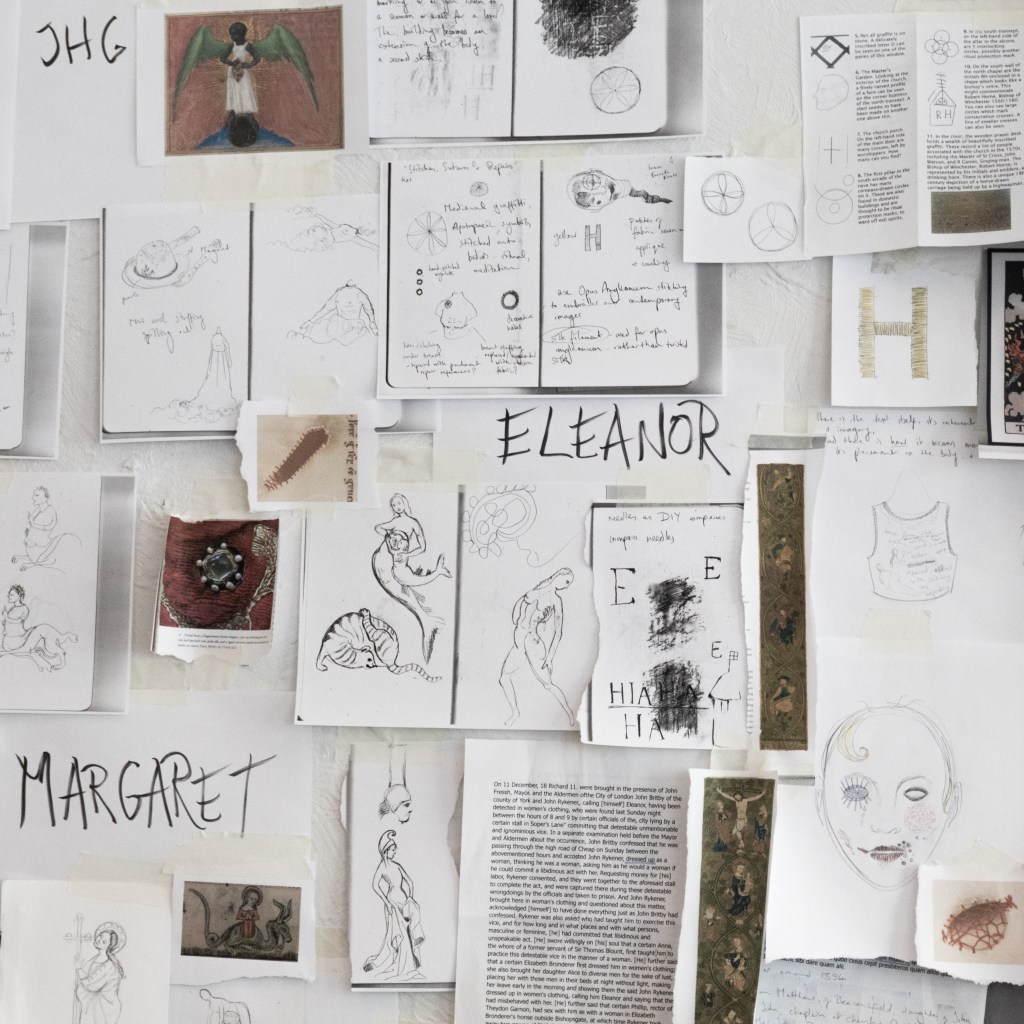
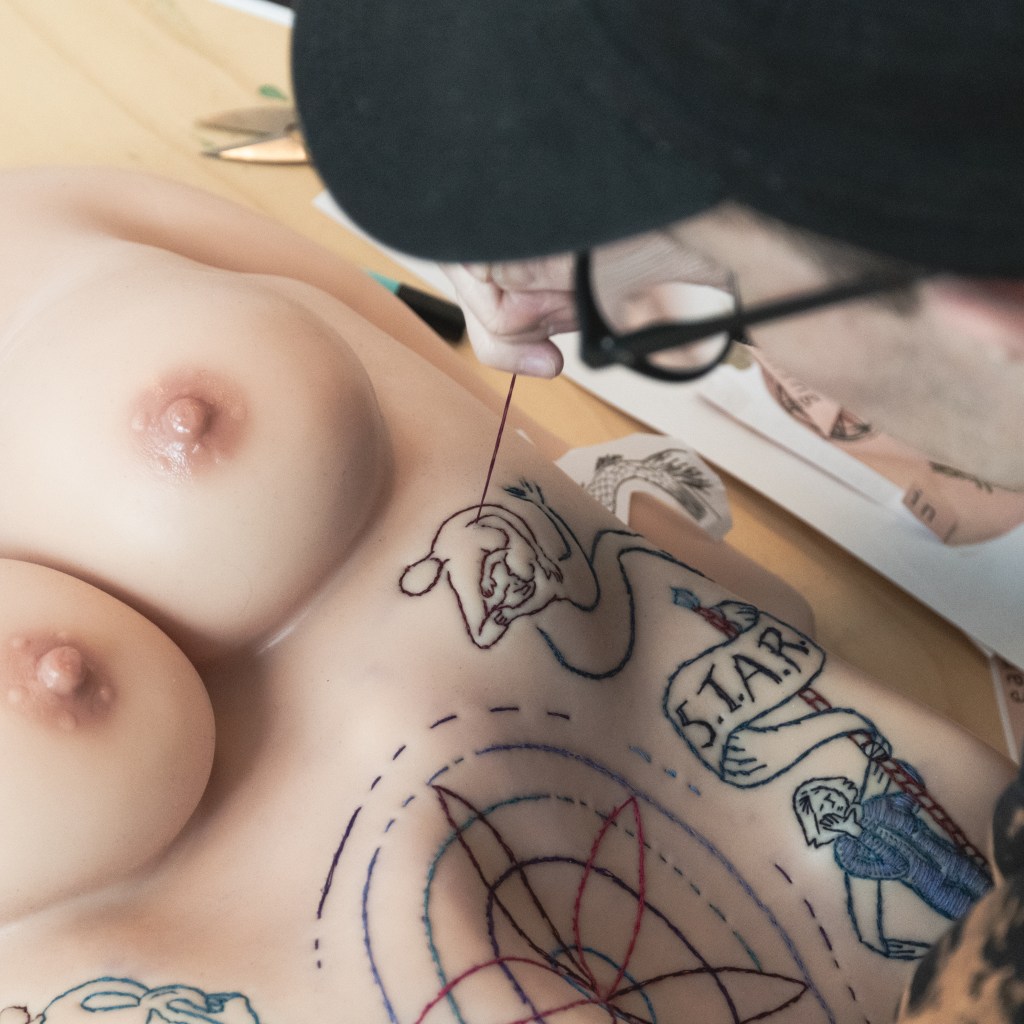
A4: My current body of work is based in embroidery, and explores the idea of queer identity as a kind of collaborative craft practice. Currently I’m building a body of work inspired by the life of Eleanor Rykener, a trans femme embroideress and sex worker who lived in 14th century London. I’ve been trying to imagine her world by learning about medieval material culture, and spirituality. Saints have become a big theme in the work, which I hadn’t planned or expected at the outset.
Q5: How has the change of environment influenced your work?
A5: Having space to spread out is completely transformative – I have loads of my research up on the walls like a giant mind-map – being able to put all the research together like that, to see it and relate to it spatially, move things around, make connections, etc, is very important for my thinking process, and not something I’ve had space to do for a while. The environment of Vaasa itself has also found its way into the work in curious ways. Hares have become a theme in the work. You don’t see them casually roaming the streets in England, so it feels magical to see them here. In medieval England people believed they were magical, and that they could change sex, so they’re sort of a queer totem. Seeing one the first night I arrived felt auspicious. Other bits of serendipity have influenced how the work has evolved – the first weekend I was here a visiting artist was showing work inspired by Joan of Arc, who was someone I’d also been thinking about, so it felt like a piece of serendipity I had to follow. During my research, I discovered that the 1930s film The Passion of Joan of Arc was filmed in a specially built concrete castle, painted pink in order to light better on black and white film – I live next to a pink concrete castle on Skolhusgatan, so that’s also found its way into the work.
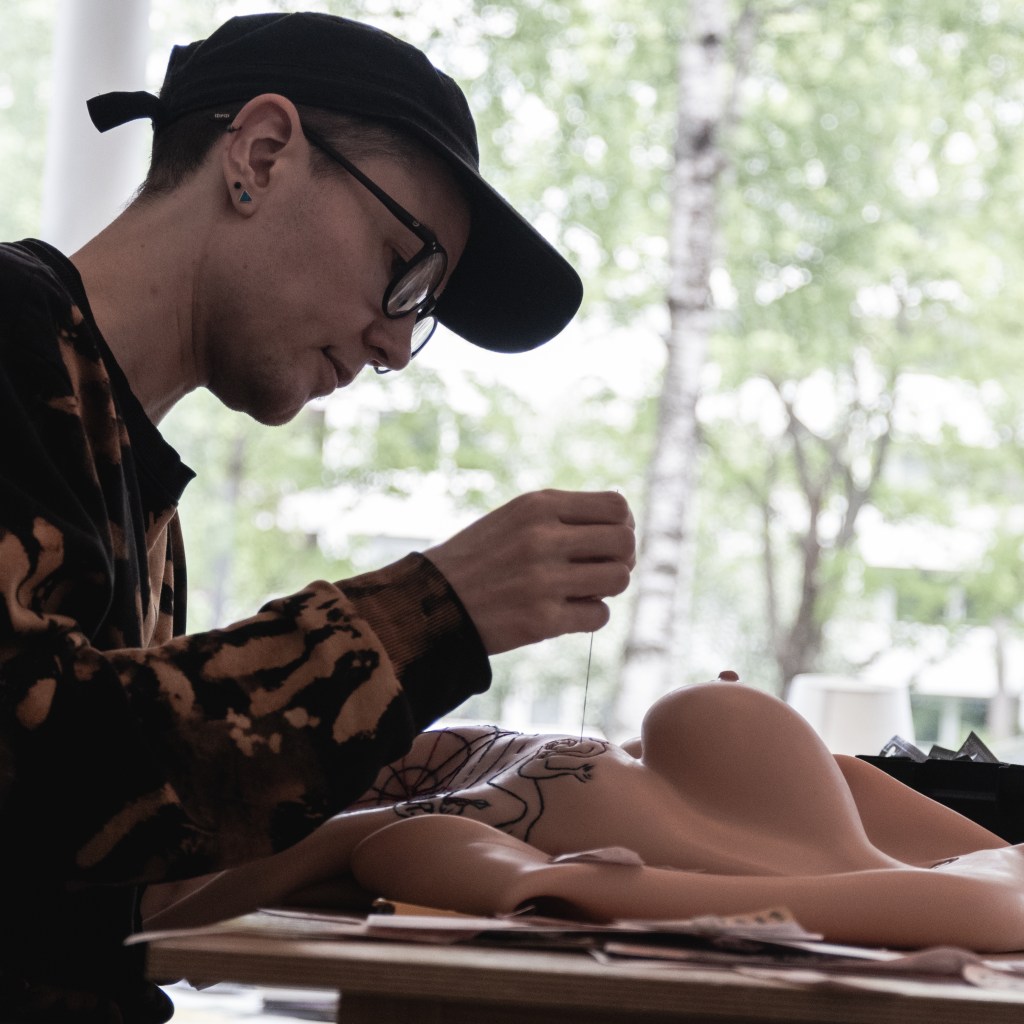
Photo: Viktor Palm.


Leave a comment